
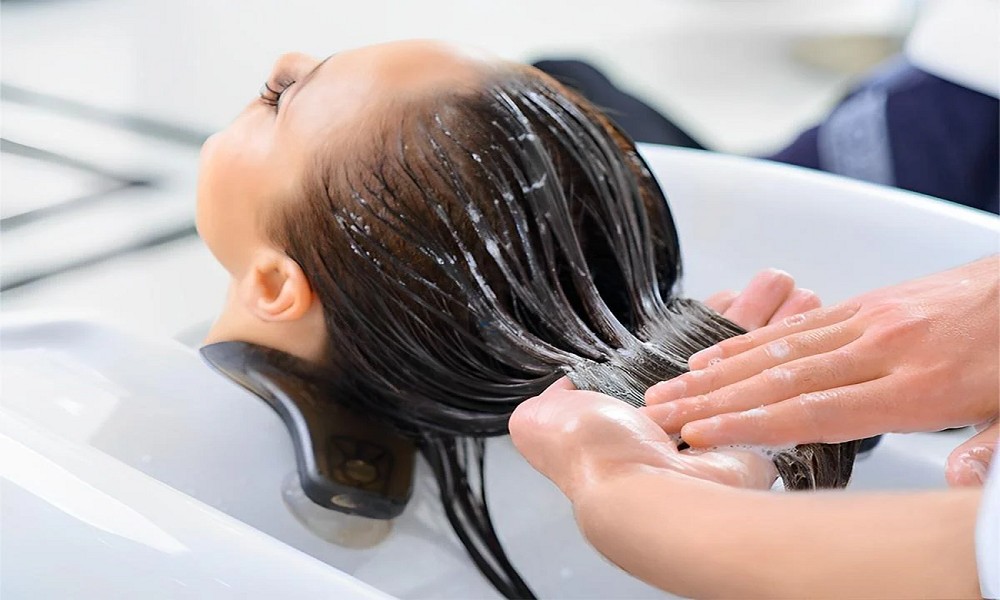
Do you also apply conditioner the way you apply shampoo? You do that quick squeeze. Then you rub everywhere on your head and rinse fast. That is certainly not the right way to use a mighty hair conditioner.
A hair conditioner serves structural support to your mane. It is a surface repair. Dermatologists often explain it like this: conditioner works like cement, filling cracks in the hair shaft. It smooths the cuticle. It reduces breakage. It lowers static. It helps hair survive daily stress. But only if you use it correctly.
The Golden Rule: Location Matters
Conditioner belongs on mid-lengths and ends. Not your scalp. Not your roots.
Why?
- Your ends are the oldest part of your hair
- They’ve seen heat, sun, brushing, and coloring
- They lose moisture first
Your scalp, on the other hand, produces natural oils. It doesn’t need heavy conditioning.
Putting the best hair conditioner on your roots:
- Weighs hair down
- Makes it greasy faster
- Causes buildup
So, start at the mid-length. Slide down. Stop before the scalp.
The Dermatologist-Approved Application Method
Learn how to do it properly.
Step 1: Prep Properly
After shampooing, don’t apply conditioner immediately. First, squeeze out excess water. Too much water dilutes the product. And the diluted product gives weak results. Your hair should be damp. Not dripping.
Step 2: Use the Right Amount
More product does not mean more shine.
For most hair types:
- 1-2 quarter-sized dollops
- Fine hair → less
- Thick or long hair → slightly more
Too much conditioner makes hair limp. Too few leaves make it rough.
|
Hair Type |
Amount |
|
Fine / Thin |
Small coin-sized |
|
Medium |
1 quarter-sized |
|
Thick / Long |
2 quarter-sized |
Step 3: Apply Strategically
Now apply.
- Start at mid-length
- Glide down to the ends
- Use long, smooth motions
If you have thick or curly hair, divide it into sections. Even coverage matters. No random squeezing. No scalp smearing.
Step 4: Detangle While It Sits
This step saves hair. Use your fingers or a wide-tooth comb. The conditioner adds slip. Slip reduces breakage. Detangling dry hair later? That’s when snapping happens. Do it now, but gently.
Step 5: Time It Right
Don’t rinse immediately. Give it 1-3 minutes. That’s enough for the conditioning agents to attach to the hair cuticle.
- Leaving it for 15 minutes in the shower? Not necessary
- Rinsing after 10 seconds? Too soon
- Moderation wins
Step 6: Rinse Thoroughly
Use lukewarm water, not hot. Hot water lifts the cuticle too much. Rinse until hair feels clean but smooth. Leftover residue leads to greasiness, flat roots, and buildup. If your hair feels heavy after drying, you likely didn’t rinse enough.
Common Conditioner Mistakes (And Why They Backfire)
Let’s clean this up.
|
Mistake |
What Happens |
|
Applying to scalp |
Greasy roots, flat hair |
|
Using too much |
Limp strands |
|
Skipping conditioner |
Dry ends, more breakage |
|
Rinsing instantly |
No time to work |
|
Leaving too long |
Heavy, coated feel |
Skipping conditioner entirely? Even oily hair needs light conditioning. Otherwise, your scalp may produce more oil to compensate.
Conditioner By Hair Type
Not all hair behaves the same. Adjust smartly.
Fine or Oily Hair
- Use lightweight formulas
- Apply sparingly
- Avoid roots strictly
Curly or Coily Hair
- Needs more moisture
- Use richer formulas
- Consider a leave-in conditioner
- Section hair for better coverage
Color-Treated or Damaged Hair
- Use bond-repair or color-safe formulas
- Deep condition once a week
Dry Hair
Your texture changes the approach.
The Science
Hair carries a slight negative charge. Conditioners contain positively charged ingredients. Opposites attract.
Those ingredients stick to damaged areas. They smooth the cuticle, reduce friction, and also prevent breakage. That’s why hair feels softer after conditioning. It’s chemistry. But chemistry only works when applied properly.
Conclusion
Hair conditioner is protection. Used right, it strengthens the hair’s outer layer. Used incorrectly, it weighs everything down. Small changes, placement, amount, and timing matter. Next time you shower, notice what you’re doing. Are you treating conditioner like skincare for your hair? Because that’s what it is. And when used correctly, it quietly does a lot of heavy lifting.