
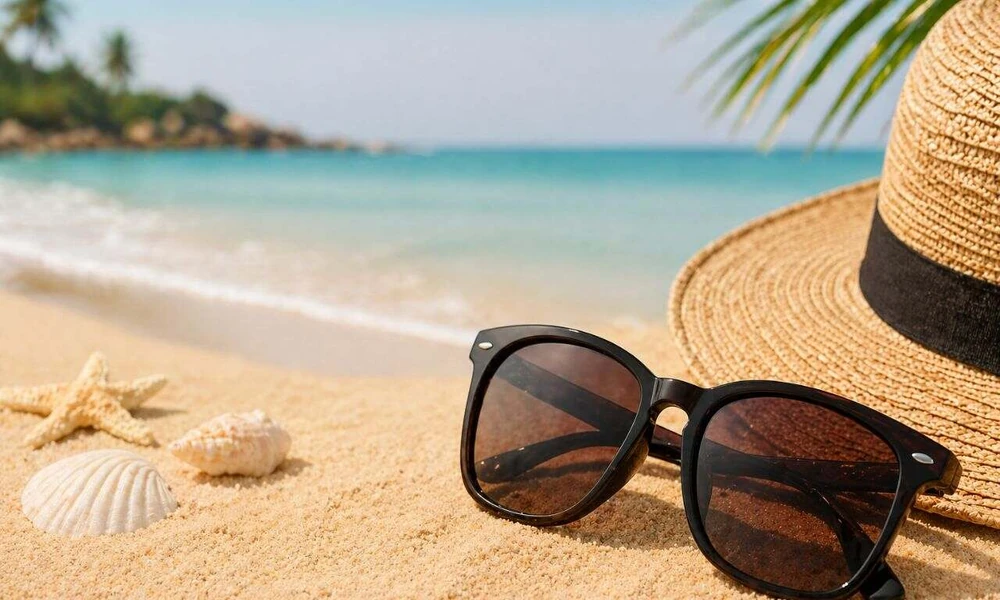
Sunglasses are easy to throw into a travel bag and just as easy to regret once the trip starts. A frame that feels fine for ten minutes can pinch after a long walk, slide when you look down, or clash with the hat you planned to wear every day. A travel pair needs to do more than look good in one mirror. It has to stay comfortable across changing plans.
Travel Sunglasses Style Reference
| Frame Style | Good For | Works Well With |
| Wayfarer-style | Everyday city travel | Casual and smart-casual looks |
| Aviator-style | Open, lightweight look | T-shirts, shirts, jackets |
| Wrap or sport frame | Active days | Athleisure, outdoor clothing |
| Rounded frame | Softer casual styling | Simple travel outfits |
Start With Comfort Around the Ears and Nose
Put the sunglasses on and leave them there for a few minutes. Check the bridge first: it should sit without digging in or sliding every time you move. Then notice the arms behind your ears. A frame that feels tight in the shop can become distracting during a long sightseeing day. If you wear headphones, a cap, or a helmet, test how the arms sit with those too.
Look Beyond the Frame Name
When browsing Ray Ban Sunglasses, use the Ray-Ban sunglasses details to compare lens information, frame measurements, and material rather than choosing from the logo alone. Sunglasses can have very different bridge widths and temple lengths even when the front shape looks similar. If you already own a comfortable pair, compare its measurements. That simple check can save you from a frame that is too wide or narrow for all-day wear.
Check Lens Information Before the Trip
For daytime travel, look for clear information about UV protection on the product listing or packaging and choose a pair that states appropriate protection. Lens tint affects how bright the world feels, but a darker lens does not by itself tell you how much UV protection it provides. Polarised lenses may help with reflected glare around roads or water, although they can also change how some screens look.
Pack for the Way You Actually Travel
If your days involve walking, public transport and quick stops, a light frame with a secure fit is useful. If you spend more time driving, check how the lens feels in changing light and whether the frame blocks your side view. While comparing Fastrack Sunglasses, think about the activities on your itinerary rather than treating your Fastrack sunglasses as a single-purpose accessory.
Use a Hard Case, Even on Short Trips
Sunglasses often get damaged in the simplest way: they are placed loose beside a charger, bottle, or keys. A hard case takes more room but protects the hinges and lenses much better than a soft pouch. Keep a small lens cloth inside so you are not wiping dust with a T-shirt. A little care keeps the pair useful beyond one holiday.
To Wrap Up
Travel sunglasses should be comfortable enough to forget you are wearing them. Check the bridge and arms, compare frame measurements, read the lens information, and think about your actual itinerary. Add a proper case, and one well-chosen pair can handle far more of a trip than several uncomfortable options.
FAQs
1. What sunglasses are easiest to travel with?
A lightweight, secure frame that works with most of your clothes and comes with a protective case is a practical choice.
2. Do dark lenses always provide better UV protection?
No. Lens darkness and UV protection are not the same thing; check the stated protection information.
3. Are polarized lenses good for traveling?
They work well to reduce reflected glare from roads, water, and other bright surfaces, and some travelers find this useful.
4. How to tell if sunglasses are too wide?
If they slide down a lot, sit way past the sides of your face, or move when you look down, the frame could be too wide.
5. Should I pack more than one pair?
A backup can be useful on longer trips, but one comfortable, protected and versatile pair is enough for many travellers.
