
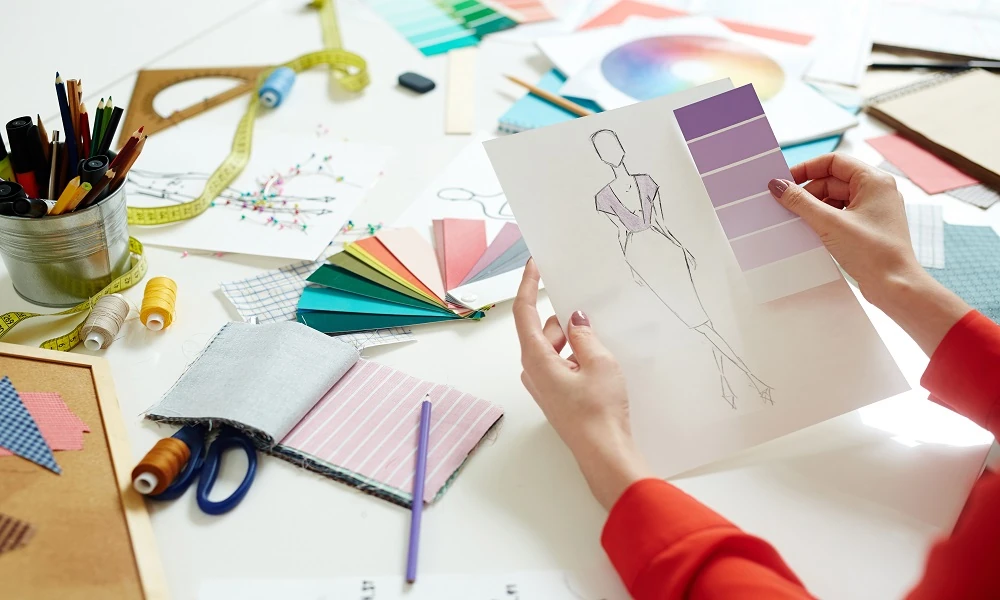
Fashion design encompasses more than merely producing fashionable apparel. It is a creative and technical discipline that integrates design principles, textiles, technology, trend analysis, and knowledge of the fashion marketplace. An optimal curriculum combines both creativity and practicality, allowing learners to gain sufficient knowledge to become professionals in this field.
Basics of Fashion
The course starts with the basics of fashion design. Learners get acquainted with the principles and components of design, color theory, proportions, shapes, textures, and composition. This information helps them realize how all the design elements work together to form aesthetically pleasing clothing pieces.
Fashion Illustration
Fashion illustration is a crucial part of the program. Students learn to convey their ideas through sketches, fashion figures, mood and concept boards, and design presentations. They acquire a unique style of working when they learn how to transform an idea into a finished collection.
Knowledge of Textiles
It is necessary to have knowledge of textiles to become a fashion designer. When taking this course, students learn about various textilesalong with their properties and uses.
Pattern Making and Garment Construction
The technical aspects of fashion design are encompassed in pattern making and garment construction sessions in which students learn how to design patterns, take measurements, and create shapes of garments. Practical lessons assist them in understanding the process through which an illustrated design becomes a garment.
Digital Design and Fashion Technology
Technology is a modern component of fashion education. Students study the software used in the industry, including Adobe Illustrator, Photoshop, CorelDRAW, and other digital design tools. This knowledge helps with fashion design illustrations, technical sketches, presentation of designs, textile prints, and formation of portfolios.
Fashion Trends and Industry Knowledge
Students are acquainted with fashion forecasting, trend analysis, styling, merchandising, and the product aspect of fashion. They study how designers analyze clients’ needs, current market trends, cultural factors, and changes in fashion.
Portfolio and Practical Projects
Practical assignments form an integral part of the study program. Students work on creating fashion collections, producing garments, styling, and preparing exhibitions. These activities provide them with the necessary experience and help them demonstrate their creative potential to their potential employers or customers.
In conclusion, a fashion design program provides a combination of creativity, technical skills, experimental applications, and exposure to the fashion industry overall. Students will learn everything from fashion illustration and textiles to pattern cutting methods and collection processes, thus preparing themselves for their bright careers in fashion design, styling, merchandising, textile design, and other creative fields. In this regard, NIF Global Saltlake provides the best fashion design course in Kolkata with an industry-relevant curriculum. NIF Global Saltlake can be considered one of the best fashion designing institute in Kolkata. If you are someone looking for a career in the creative industry, this course can be your best fit.