
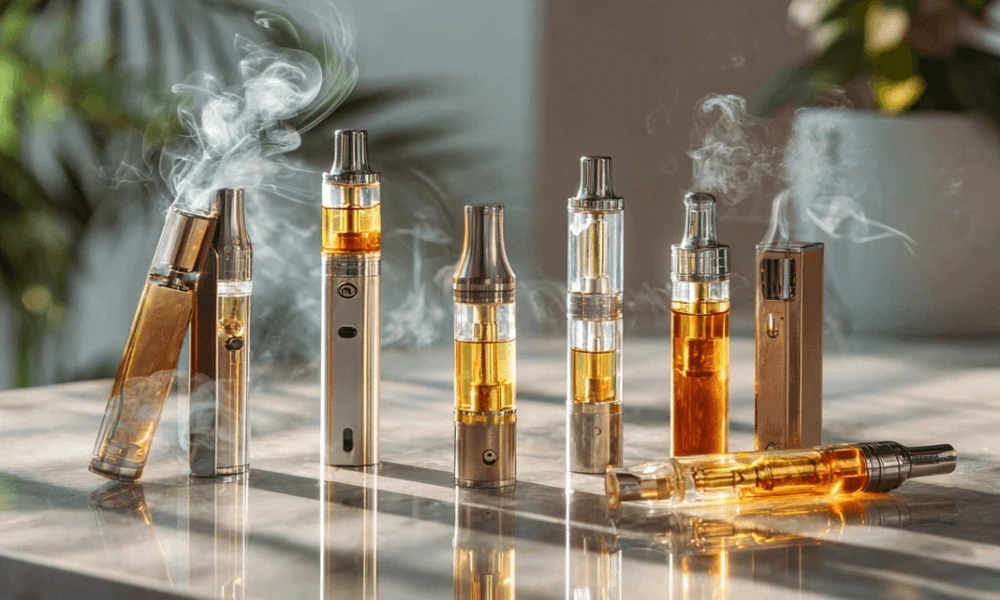
A cartridge with the same price point and hardware, but an entirely different product inside. The gap between those two is far too often ignored. Exhale Wellness stocks both live resin and distillate vape oil because they serve different purposes, not because one is a cheaper version of the other. The production method separates them. And production method changes everything about what the oil delivers once it is in a cartridge.
Live resin characteristics
Fresh frozen plant material is the starting point for live resin. No drying. No curing. The plant goes from harvest directly into freezing, which stops the degradation of terpenes and minor cannabinoids that begins almost immediately after cutting. Standard extraction skips this step, and a significant portion of the plant’s original character is lost because of it.
What comes out of live resin extraction is richer in compound variety than most refined oils. Terpene content is higher. The flavour carries a strain-specific character that holds up across the session rather than fading after the first draw. Oil consistency runs thicker than distillate, which is worth knowing when setting voltage. High heat burns off the terpene content that makes live resin worth purchasing. Lower voltage settings preserve it.
Distillate characteristics
Distillate is refined down through multiple processing stages until what remains is concentrated cannabinoid oil with very little residual plant character. Winterisation removes waxes and lipids. Fractional distillation isolates the target cannabinoid from everything else. The final product is consistent, high in THC percentage, and neutral in flavour unless terpenes are added back after processing.
Those added terpenes are rarely from the original plant. Botanical terpenes or isolated compounds get blended in to introduce flavour, and the result sits differently than a naturally preserved terpene profile. Users familiar with both formats distinguish between them without effort.
- Distillate tests higher in THC percentage than live resin across comparable batches.
- Batch-to-batch consistency is more reliable with distillate than with plant-derived live resin.
- Storage requirements are less strict since volatile terpene compounds are absent.
- Flavour is present when terpenes are added, but lacks the complexity of preserved live resin profiles.
Comparing the two directly
Percentage figures are not a direct comparison tool between these two formats. A live resin cartridge at 70% and a distillate at 90% do not provide equivalent experiences despite what the numbers suggest. Live resin carries a broader compound interaction that distillate does not replicate. That interaction influences the session beyond what isolated THC content alone accounts for.
Flavour difference is immediate. Live resin is complex and strain-specific. Distillate is clean and consistent. Neither description is a criticism of either product. They reflect what each format was designed to deliver and nothing more.
Choosing the right format
Strain character, terpene complexity, and a broader compound profile across each session. Live resin answers those priorities without qualification. Reliable potency, neutral output, predictable performance across multiple cartridges from the same batch. Distillate answers those instead.
Standard 510 thread hardware runs both formats without issue. Voltage calibration matters more with live resin given terpene sensitivity, but neither format demands specialised equipment. One format is not superior to the other in absolute terms. Each one fits a specific set of priorities, and most users who try both arrive at a clear preference relatively quickly without much comparison needed. vae